
The global debate over data center expansion has increasingly become a debate over physical resources. Communities are being asked to accommodate extraordinary new demands for electricity, water, land, cooling capacity and grid infrastructure as computing and artificial intelligence continue to scale. These concerns are legitimate, but they begin too late in the causal chain. Electricity consumption, water consumption, cooling demand and physical footprint are not the origins of the problem. They are consequences of the computational architecture the data center was built to support.
Every physical data center requirement begins with computational decisions about how information is represented, stored, copied, moved, protected, recovered and processed. Those decisions determine how much storage must exist, how much information must move across networks, how much computation must occur and how much supporting infrastructure must remain continuously available. Those computational requirements ultimately become physical requirements for equipment, electricity, cooling, water, land and grid capacity.
For decades, the technology industry has responded to increasing computational demand by making hardware more efficient while continuing to expand physical capacity. Processors became faster, storage became denser, networks became more capable and cooling systems became more sophisticated. Yet the underlying architecture continued to depend on extensive duplication, versioning, replication, data movement, security infrastructure and recovery systems. The industry became increasingly efficient at supporting the architecture without fundamentally questioning how much infrastructure that architecture required.
IAMMOGO begins from a different premise. Instead of accepting the resource requirements produced by the existing computational model and asking how to supply them more efficiently, IAMMOGO examines the architecture creating those requirements. If information can be represented, stored, distributed, protected and recovered differently, then the physical infrastructure required to support computing is not an unquestioned constant. Data center expansion is the consequence. The computational architecture creating the demand is where the problem begins.
The Truth the Data Center Industry Isn't Telling You:
Compute Is Only the Beginning
The public discussion surrounding artificial intelligence often reduces data center expansion to a simple explanation: AI requires enormous amounts of compute, and enormous amounts of compute require enormous data centers. That explanation is incomplete. Computation is only one part of the infrastructure being built. Modern data centers must also store information, maintain replicas, move data across networks, preserve backups, support recovery, operate security systems and maintain the physical infrastructure required to keep all of those systems continuously available.
Each of these functions carries a physical cost. Storage requires hardware. Replication requires additional capacity. Networking requires equipment and energy. Security and recovery require processing, monitoring and retained state. Every additional system consumes electricity, occupies physical space and produces heat that must be removed. The resulting demand extends outward into power distribution, cooling systems, water consumption, generators, batteries, substations and the facilities required to contain and operate them.
The important distinction is that many of these requirements are not created by computation itself. They are created by the architecture surrounding computation. When information must be copied for availability, replicated for resilience, transmitted for distribution, duplicated for backup and surrounded by additional systems for protection and recovery, the physical burden grows beyond the processing required to perform the original computational work.
IAMMOGO attacks this problem beneath the infrastructure layer. Its architecture addresses how information is represented, stored, varied, distributed, protected, recovered and authorized before those requirements become additional hardware. The objective is not simply to make the same data center consume fewer resources. It is to determine which computational requirements can be removed, reduced or fundamentally changed so that the infrastructure associated with them never needs to be built at the same scale.
Data Centers Scale Copies. IAMMOGO Scales State.
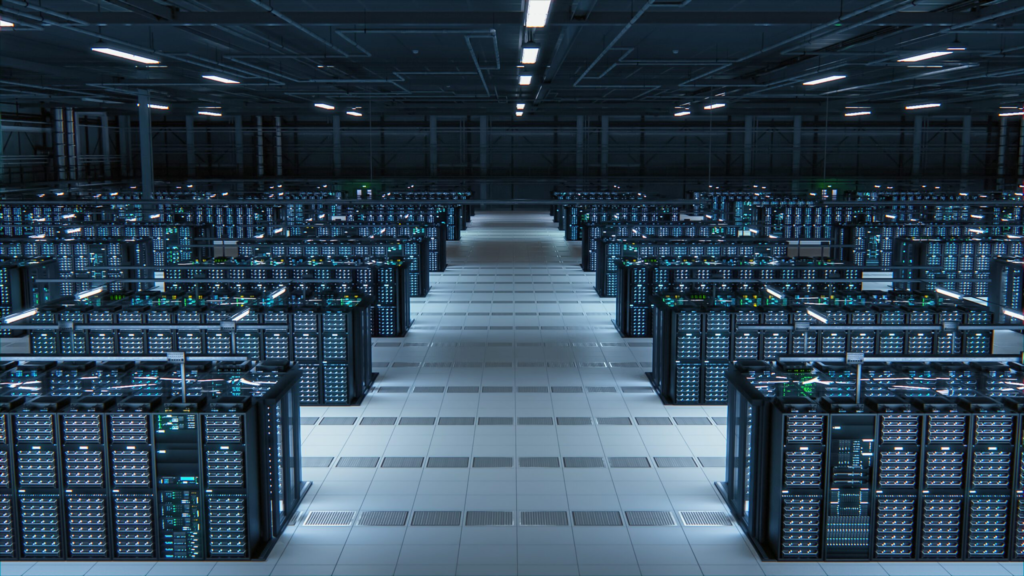
Modern data infrastructure is built around digital objects. A file is stored, copied, backed up, replicated, transferred, modified and preserved again for recovery. Each operation may serve a legitimate purpose, but the architecture repeatedly creates additional complete or substantially complete representations of information that must themselves be stored, moved, protected and maintained. At data center scale, this model does not simply preserve information. It continuously increases the digital burden that physical infrastructure must support.
IAMMOGO changes the fundamental unit of that architecture. Any data asset can be transformed from its conventional representation into deterministic state objects from which the required asset can be reconstructed and verified. The transformation itself produces a substantially smaller data footprint. Across assets tested by IAMMOGO to date, state transformation has produced reductions of approximately 30 to 70 percent or more relative to the original asset, depending on data type and reconstruction requirements. . This is not conventional compression. IAMMOGO is changing how the information is represented and retained as deterministic state.
The reduction becomes significantly greater when information changes over time. Once an authoritative state exists, IAMMOGO does not need to preserve every subsequent variation as another complete independent object. It records the anomalies that distinguish the new state from the authoritative state while preserving the relationships required for deterministic reconstruction and verification. In variation testing conducted by IAMMOGO, retaining the distinguishing state rather than another complete version has produced reductions of approximately 90 to 99 percent relative to storing that additional complete version, depending on the extent of the change. A hundred versions therefore do not inherently require a hundred complete copies of the underlying asset.
The same state model extends to distribution. IAMMOGO can determine what verified state already exists at a destination and transmit only the state that is missing. The receiving system reconstructs the required asset locally and verifies the result. The architectural shift therefore compounds across storage, versioning and distribution: the initial asset can require less retained data, subsequent variations can require only their distinguishing state, and networks do not need to repeatedly transport state already present at the destination. IAMMOGO is not making the conventional copy-based model incrementally more efficient. It replaces the assumption that every usable representation of information must continue to exist, move and scale as another complete digital object.
Data Centers Protect Systems After the Fact. IAMMOGO Governs What Can Happen Before It Happens.
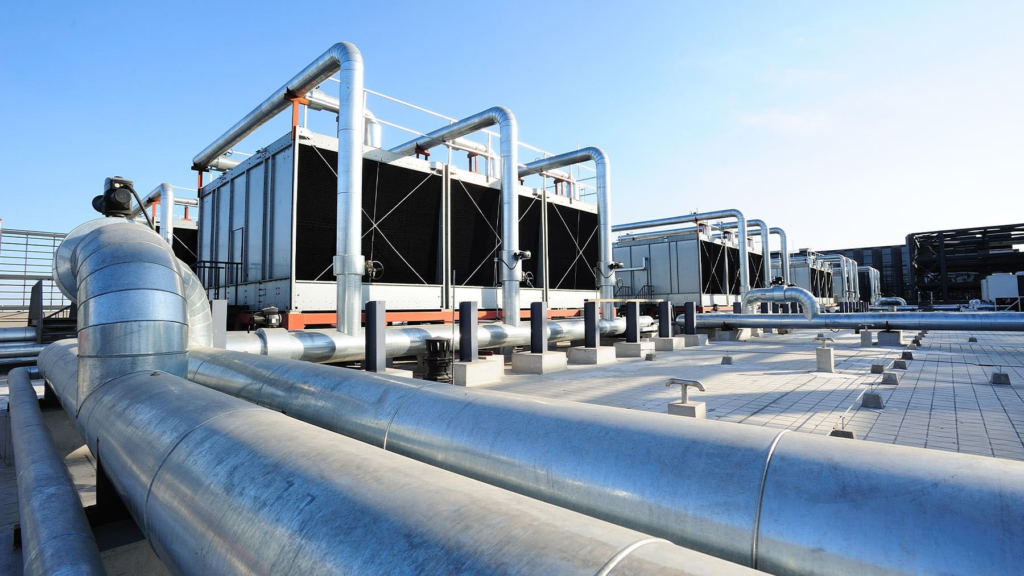
Modern data center security is built around extensive layers of protection, monitoring, detection, replication and recovery. These systems are essential within the conventional architecture, but much of their work occurs after an event has been attempted or a state has already changed. Systems monitor activity, identify anomalies, investigate incidents, preserve backups and restore damaged or compromised information. The architecture is designed to detect failure, contain its consequences and recover from it.
IAMMOGO moves authority to the point before execution. TrueState converts inputs, outputs, commands, events and system conditions into deterministic state representations. The Deterministic Ethics-Constrained Transition Law (DECTL) defines which state transitions are admissible, while the Deterministic AI Operating System (DAIOS) enforces that authority before execution. A proposed transition must therefore have standing within the defined state before it can become executable. When the required authority cannot be established, the transition does not proceed.
That execution boundary operates within a broader state-protection architecture. StateCustody maintains deterministic identity, integrity, permissions, movement, variations and chain of custody. MOGO ZeroLeak protects authorized state boundaries, while MOGO Self-Healing preserves the ability to return compromised or corrupted information to its last verified admissible state. Together, these systems shift protection from an architecture primarily dependent on observing, detecting and recovering from events toward one in which state, authority, custody and recovery are established as properties of the computational architecture itself.
This does not mean that every conventional security, monitoring, backup or disaster-recovery system can simply be removed. It creates a different engineering question…
If unauthorized transitions can be denied before execution, protected information remains under deterministic custody, state cannot leave its authorized boundary and corrupted state can be reconstructed from its last verified condition, how much infrastructure is still required to detect, replicate, monitor and recover from failures that the conventional architecture assumes will occur?
Data Centers Measure What They Consume.
IAMMOGO Governs What They Can Consume.
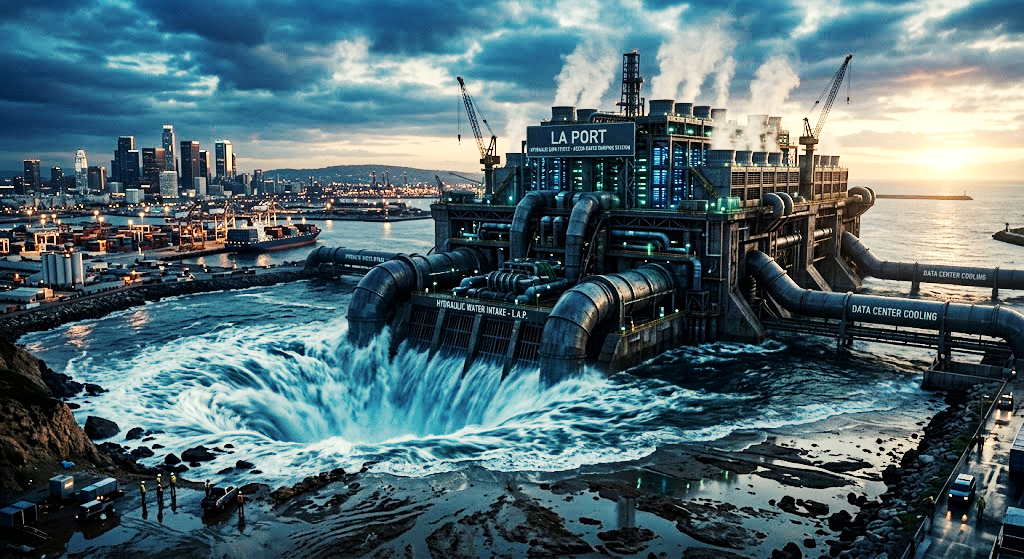
Data centers can measure electricity and water consumption with extraordinary precision, yet measurement does not prevent a facility from exceeding the limits imposed on it. A meter can document an excessive water draw. A monitoring system can record a power threshold violation. An audit can establish when and how a resource commitment was breached. In each case, the evidence arrives after the physical resource has already been consumed. IAMMOGO challenges that model by treating resource limits not merely as values to monitor, but as boundaries that can govern whether the next state is authorized to occur.
IAMMOGO approaches physical resources as deterministic states that can exist within the same authority architecture governing computational activity. A water draw, electrical load, thermal condition or equipment operation can be represented as a measurable state and evaluated against an established boundary. Where the physical system provides the necessary control interface, the Deterministic Ethics-Constrained Transition Law (DECTL) can define the admissible resource boundary, and the Deterministic AI Operating System (DAIOS) can determine whether the proposed transition has authority before allowing it to proceed.
This changes the role of a resource limit. A facility authorized to operate within a defined electrical load or water allocation would not have to rely exclusively on monitoring consumption and identifying violations afterward. The authorized limit can become part of the computational state governing the system itself. If a proposed operation would require a transition beyond that established boundary, the system can deny the transition rather than merely create a record showing that the boundary was crossed.
For communities, utilities and regulators, the distinction is significant. Resource commitments can move from policy statements and retrospective reports toward technically enforceable operating boundaries, while IAMMOGO preserves the corresponding states, decisions and transitions under deterministic custody. The objective is not simply to know how much a data center consumed. It is to establish what the facility was authorized to consume and provide verifiable evidence that its computational systems remained within that authority.
10 Questions Every Community Should Ask Before Approving Data Center Expansion
Data center proposals are typically evaluated by asking whether a community can provide the electricity, water, land and infrastructure an operator says it requires. That process accepts the operator’s computational requirements before examining whether the architecture producing those requirements is itself necessary.
IAMMOGO proposes a different standard. Communities, utilities and public officials should be able to question not only where the requested resources will come from, but why the computing architecture requires them in the first place. The following questions are intended to move the data center expansion debate upstream, from accommodating projected resource demand to establishing whether that demand is technologically necessary.
Has the operator demonstrated that the amount of data being stored is technologically necessary? How much of the infrastructure is storing redundant copies, versions and representations that could be reduced?
How much of the facility’s storage capacity exists to maintain complete copies, backups, replicas, versions and recovery points? Could any of that information instead be reconstructed from verified state?
How much information is repeatedly transmitted between data centers, networks and users when receiving systems already possess information required to reconstruct the requested object?
How much electricity performs computation necessary to produce the required result? How much supports duplication, data movement, monitoring, recovery and other requirements imposed by the surrounding architecture?
How much supporting infrastructure exists because cybersecurity detects and responds to prohibited activity after it occurs rather than preventing unauthorized state transitions before execution?
Has the operator demonstrated that its proposed water, electricity, cooling and land requirements represent the lowest practical resource demand available for the computing work being performed?
Are water and electricity limits technically enforced by the systems consuming those resources, or are they operational targets measured and reported after consumption occurs?
Can the operator produce an independently verifiable history showing what resources were consumed, what limits were in effect and whether those limits were exceeded?
Before additional generation, transmission, water infrastructure or land development is approved, has an alternative computational architecture been independently tested against the proposed architecture using the same workload and required output?
If the same computing outcome can be produced with materially less storage, transmission, supporting infrastructure, electricity, cooling and water, what justifies requiring a community to support the more resource-intensive architecture?
These questions do not presume that every proposed data center is unnecessary or that every resource requirement can be eliminated. They establish something more fundamental: technological necessity should be demonstrated rather than assumed. If communities are being asked to commit physical resources for decades, the computational architecture creating that demand should be subject to scrutiny alongside the facility itself.
Data Center Expansion Is an Architectural Choice.
Will the Industry Prove Its Architecture Requires It?
The technology industry has treated data center expansion as the inevitable physical consequence of progress in artificial intelligence and computing. That conclusion deserves far greater scrutiny. Data centers do not expand because computing obeys a law requiring more buildings, more storage, more electricity, more water and more grid capacity. They expand because the computational architecture deployed inside them creates requirements that must ultimately be satisfied by physical infrastructure.
IAMMOGO demonstrates that those architectural assumptions are not immutable. Information can be transformed into deterministic state with a reduced data footprint while remaining reconstructable and verifiable. Variations can be represented by the anomalies that distinguish them rather than another complete copy. Verified state already present at a destination does not need to be transmitted again. Computational transitions can be subjected to deterministic authority before execution, while custody, protection and recovery can operate as properties of state itself. Even physical resources such as electricity, water and thermal conditions can become governed states rather than values observed only after consumption occurs.
What IAMMOGO has not yet established is the total physical consequence of applying this architecture across a data center at scale. That distinction matters. IAMMOGO should not claim a reduction in electricity, cooling, water, equipment or land that has not yet been independently measured. The data center industry, however, should be held to the same standard. Projecting the resources required to scale the architecture already in use does not prove that those resources are inherently required by computing. It proves what that particular architecture requires.
That is now a testable question. Put the same workloads, required outputs, integrity requirements and operating conditions against both architectures. Measure the information stored, copies maintained, data transmitted, computation performed, security and recovery infrastructure required, equipment operated, electricity consumed, heat generated, cooling required and water used. Let independent engineers establish the methodology and let the measurements determine the result.
Communities should not be asked to surrender additional water, electricity, land and public infrastructure merely because the existing computational architecture demands them. If the industry maintains that continued data center expansion is technologically necessary, it should be prepared to demonstrate that necessity against an architecture designed to require less.
The burden of proof should no longer be whether society can find enough resources to sustain unlimited computational infrastructure. The burden should be whether the computational architecture demanding those resources can prove it needs them.

TL;DR
Data center expansion is not an unavoidable consequence of AI; it is a physical consequence of computational architecture. IAMMOGO challenges the industry to prove that its massive demands for storage, electricity, water, cooling and infrastructure are technologically necessary rather than requirements created by the architecture it chose.
#IAMMOGO #DAIOS #DECTL #ExecutionEnforcement #DataCenter
Disclaimer
This article reflects the views and technical perspective of Timothy Gough, Founder of IAMMOGO. References to IAMMOGO, DAIOS, Deterministic AI Infrastructure, SYNKTRON, MOGO Vault, and related systems describe proprietary concepts, technologies, and development directions associated with IAMMOGO.
Nothing in this article should be interpreted as financial, legal, cybersecurity, compliance, or investment advice. Technical descriptions are provided for informational and editorial purposes only and may include forward-looking statements, product concepts, development goals, or architectural positions that are subject to change.
Any comparisons to cloud computing, artificial intelligence systems, middleware, or enterprise technology models are intended as general industry commentary. Specific implementation details, performance outcomes, compliance results, and security capabilities may vary based on deployment environment, configuration, hardware, and operational use.
All trademarks, product names, and company names referenced belong to their respective owners. IAMMOGO is not affiliated with any third-party platform or provider unless expressly stated.